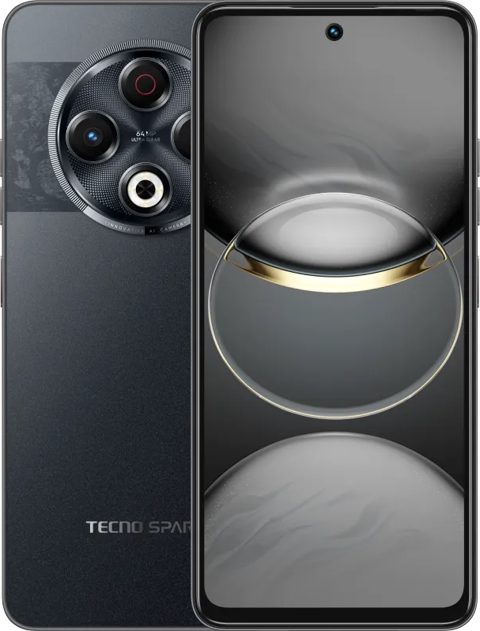
Tecno Tecno Spark 30
Tecno Spark 30 vs. Ulefone Note 18 Pro vs. Infinix Hot 50i
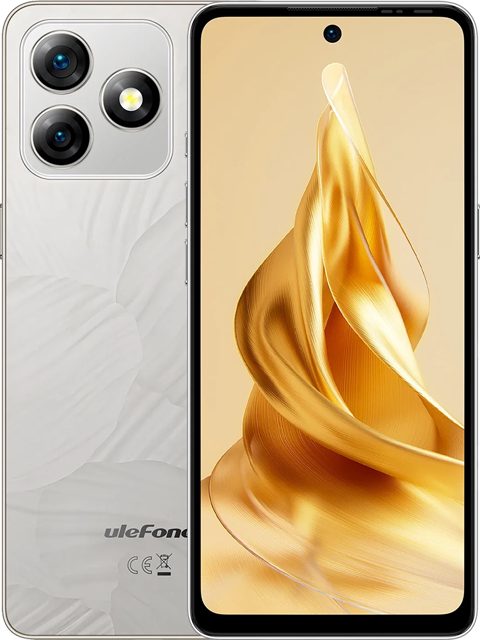
Ulefone Ulefone Note 18 Pro
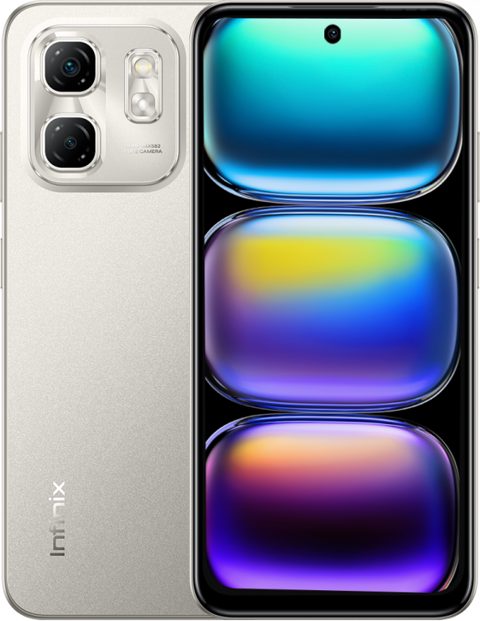
Infinix Infinix Hot 50i
Veredicto
Tecno Spark 30 y Ulefone Note 18 Pro están igualados para la mayoría
Puntuación global
- Tecno Spark 30 28
- Ulefone Note 18 Pro 28
- Infinix Hot 50i 24
Por qué elegir Tecno Spark 30
- Pantalla más nítida (396 ppp frente a 264 ppp)
- Pantalla un 60 % más brillante (800 nits frente a 500 nits)
- Grabación de vídeo en 1440p 30fps (frente a 1080p 30fps)
Por qué elegir Ulefone Note 18 Pro
- Cámara ultra gran angular
- Cristal de pantalla más resistente (cristal reforzado frente a cristal sin especificar)
- Cámara de selfis más nítida (32 MP frente a 13 MP)
Por qué elegir Infinix Hot 50i
- Pantalla de 120 Hz más fluida (frente a 90 Hz)
Tecno Spark 30 es algo mejor para jugar
Puntuación global
- Tecno Spark 30 22
- Ulefone Note 18 Pro 19
- Infinix Hot 50i 18
Por qué elegir Tecno Spark 30
- Pantalla más nítida (396 ppp frente a 264 ppp)
- Pantalla un 60 % más brillante (800 nits frente a 500 nits)
Por qué elegir Ulefone Note 18 Pro
- Cristal de pantalla más resistente (cristal reforzado frente a cristal sin especificar)
Por qué elegir Infinix Hot 50i
- Pantalla de 120 Hz más fluida (frente a 90 Hz)
Ulefone Note 18 Pro es algo mejor para fotos y vídeo
Puntuación global
- Tecno Spark 30 35
- Ulefone Note 18 Pro 40
- Infinix Hot 50i 32
Por qué elegir Tecno Spark 30
- Grabación de vídeo en 1440p 30fps (frente a 1080p 30fps)
- Pantalla más nítida (396 ppp frente a 264 ppp)
- Pantalla un 60 % más brillante (800 nits frente a 500 nits)
Por qué elegir Ulefone Note 18 Pro
- Cámara ultra gran angular
- Cámara de selfis más nítida (32 MP frente a 13 MP)
- Cristal de pantalla más resistente (cristal reforzado frente a cristal sin especificar)
Por qué elegir Infinix Hot 50i
- Pantalla de 120 Hz más fluida (frente a 90 Hz)
Ulefone Note 18 Pro y Tecno Spark 30 están igualados en autonomía
Puntuación global
- Tecno Spark 30 23
- Ulefone Note 18 Pro 24
- Infinix Hot 50i 21
Por qué elegir Tecno Spark 30
- Pantalla más nítida (396 ppp frente a 264 ppp)
- Pantalla un 60 % más brillante (800 nits frente a 500 nits)
- Grabación de vídeo en 1440p 30fps (frente a 1080p 30fps)
Por qué elegir Ulefone Note 18 Pro
- Cámara ultra gran angular
- Cristal de pantalla más resistente (cristal reforzado frente a cristal sin especificar)
- Cámara de selfis más nítida (32 MP frente a 13 MP)
Por qué elegir Infinix Hot 50i
- Pantalla de 120 Hz más fluida (frente a 90 Hz)
No hay datos suficientes para elegir un ganador por su precio
Puntuación global
- Tecno Spark 30 —
- Ulefone Note 18 Pro —
- Infinix Hot 50i —
Por qué elegir Tecno Spark 30
- Pantalla más nítida (396 ppp frente a 264 ppp)
- Pantalla un 60 % más brillante (800 nits frente a 500 nits)
- Grabación de vídeo en 1440p 30fps (frente a 1080p 30fps)
Por qué elegir Ulefone Note 18 Pro
- Cámara ultra gran angular
- Cristal de pantalla más resistente (cristal reforzado frente a cristal sin especificar)
- Cámara de selfis más nítida (32 MP frente a 13 MP)
Por qué elegir Infinix Hot 50i
- Pantalla de 120 Hz más fluida (frente a 90 Hz)
Puntuación por categoría
Rendimiento
- Tecno Spark 30 19
- Ulefone Note 18 Pro 17
- Infinix Hot 50i 19
Estimado
Pantalla
- Tecno Spark 30 26
- Ulefone Note 18 Pro 18
- Infinix Hot 50i 13
Cámara
- Tecno Spark 30 46
- Ulefone Note 18 Pro 56
- Infinix Hot 50i 43
Batería
- Tecno Spark 30 19
- Ulefone Note 18 Pro 20
- Infinix Hot 50i 19
Tecno Spark 30: EstimadoUlefone Note 18 Pro: Probado en laboratorioInfinix Hot 50i: EstimadoConstrucción y resistencia
- Tecno Spark 30 24
- Ulefone Note 18 Pro 28
- Infinix Hot 50i 24
Conectividad y funciones
- Tecno Spark 30 29
- Ulefone Note 18 Pro 24
- Infinix Hot 50i 19
Tamaño y peso
- Tecno Spark 30
- Ulefone Note 18 Pro
- Infinix Hot 50i
Especificaciones completas
Datos generales
Ficha técnica Tecno Spark 30Ulefone Note 18 ProInfinix Hot 50i
Fecha de anuncio
Sábado, 21 de septiembre de 2024
Viernes, 01 de noviembre de 2024
Lunes, 23 de septiembre de 2024
Fecha de lanzamiento
Martes, 01 de octubre de 2024
Viernes, 01 de noviembre de 2024
Martes, 01 de octubre de 2024
Estado
Disponible
Disponible
Disponible
Diseño
Ficha técnica Tecno Spark 30Ulefone Note 18 ProInfinix Hot 50i
Alto
168 mm (6.61 pulgadas)
168.8 mm (6.65 pulgadas)
165.7 mm (6.52 pulgadas)
Ancho
76.4 mm (3.01 pulgadas)
76.8 mm (3.02 pulgadas)
77.1 mm (3.04 pulgadas)
Grosor
7.7 mm (0.30 pulgadas)
8.9 mm (0.35 pulgadas)
8.1 mm (0.32 pulgadas)
Peso
—
211 g (7.44 oz)
184 g (6.49 oz)
Materiales del chasis
Parte trasera: Plástico o polímero de silicona (cuero ecológico)
Marco: Plástico
Frontal: Vidrio
Marco: Plástico
Frontal: Vidrio
—
Parte trasera: Cristal
Marco: Plástico
Frontal: Vidrio
Marco: Plástico
Frontal: Vidrio
Colores
Negro, Bumblebee Edition, Magic Skin 3.0, Blanco
Negro, Gris, Blanco
Negro, Verde, Gris
Resistencia
Estanco al polvo y resistente al agua (contra salpicaduras)
—
Resistente al polvo
Resistente al agua (contra salpicaduras)
Resistente al agua (contra salpicaduras)
Certificaciones de resistencia
IP64
—
IP54
Pantalla
Ficha técnica Tecno Spark 30Ulefone Note 18 ProInfinix Hot 50i
Tipo de pantalla
IPS LCD
IPS LCD
IPS LCD
Tamaño de la pantalla
6.78 pulgadas
6.78 pulgadas
6.7 pulgadas
Resolución
1080 × 2460 píxeles
720 × 1640 píxeles
720 × 1600 píxeles
Tasa de refresco
90 Hz
90 Hz
Mejor:
120 Hz
Relación de aspecto
—
—
20:9
Densidad de píxeles
Mejor:
396 ppp
264 ppp
262 ppp
Relación pantalla-cuerpo
≈ 85%
≈ 84.2%
≈ 84.8%
Protección del cristal
—
Mejor:
Vidrio Corning Gorilla Glass
—
Brillo máximo
800 cd/m²
—
500 cd/m²
Pantalla táctil
Sí
Sí
Sí
Funciones de la pantalla
Pantalla táctil capacitiva
Pantalla multitáctil
Pantalla multitáctil
Pantalla táctil capacitiva
Pantalla multitáctil
Pantalla multitáctil
Pantalla táctil capacitiva
Pantalla multitáctil
Pantalla multitáctil
Hardware
Ficha técnica Tecno Spark 30Ulefone Note 18 ProInfinix Hot 50i
Chipset
MediaTek Helio G91
MediaTek Helio G91
MediaTek Helio G81
Núcleos de la CPU
8
8
8
Tecnología de fabricación
12 nm
12 nm
12 nm
Frecuencia máxima de la CPU
2.0 GHz
2.0 GHz
2000 MHz
Arquitectura de la CPU
64-bit
64-bit
64-bit
Microarquitectura
2x 2.0 GHz – Cortex-A75
6x 1.8 GHz – Cortex-A55
6x 1.8 GHz – Cortex-A55
2x 2.0 GHz – Cortex-A75
6x 1.8 GHz – Cortex-A55
6x 1.8 GHz – Cortex-A55
2x 2.0 GHz – Cortex-A75
6x 1.8 GHz – Cortex-A55
6x 1.8 GHz – Cortex-A55
Tipo de memoria
LPDDR4X
LPDDR4X
LPDDR4X
GPU
ARM Mali-G52 MC2
ARM Mali-G52 MC2
ARM Mali-G52 MP2
RAM
8GB
6GB
4GB, 6GB, 8GB
Almacenamiento
128GB, 256GB
256GB
128GB, 256GB
Versiones
128GB 8GB RAM
256GB 8GB RAM
256GB 8GB RAM
256GB 6GB RAM
128GB 4GB RAM
128GB 6GB RAM
256GB 4GB RAM
256GB 6GB RAM
256GB 8GB RAM
128GB 6GB RAM
256GB 4GB RAM
256GB 6GB RAM
256GB 8GB RAM
Almacenamiento ampliable
Sí
Sí
Sí
Ranuras para tarjetas
microSDXC
microSDXC
microSDXC
Software
Ficha técnica Tecno Spark 30Ulefone Note 18 ProInfinix Hot 50i
Sistema operativo
Android 14 (Upside Down Cake)
Android 14 (Upside Down Cake)
Android 14 (Upside Down Cake)
Interfaz de usuario
HIOS 14
—
XOS 14.5
Cámara principal
Ficha técnica Tecno Spark 30Ulefone Note 18 ProInfinix Hot 50i
Prestaciones de la cámara
Sí
Sí
Sí
Cámara dual
64 MP ( Gran angular ), 0.8 μm, 1/1.73" Tamaño del sensor
0.08 MP ( Lente auxiliar )
PDAF
0.08 MP ( Lente auxiliar )
64 MP, ƒ/1.9 ( Gran angular ), 0.64 μm, 1/1.73" Tamaño del sensor
50 MP, ƒ/2.2, 117° ( Ultra gran angular ), 1/2.8" Tamaño del sensor
PDAF
50 MP, ƒ/2.2, 117° ( Ultra gran angular ), 1/2.8" Tamaño del sensor
48 MP, ƒ/1.8 ( Gran angular ), 0.8 μm, 1/2.0" Tamaño del sensor
0.08 MP ( Lente auxiliar )
Enfoque automático (AF)
0.08 MP ( Lente auxiliar )
Compatibilidad con flash
Sí
Sí
Sí
Tipo de flash
Flash LED cuádruple
Flash LED
Flash LED doble
Características
Alto Rango Dinámico (HDR)
Alto Rango Dinámico (HDR)
Panorámica
Panorámica
Alto Rango Dinámico (HDR)
Panorámica
Panorámica
Modos de vídeo
Sí
Sí
Sí
Resolución de vídeo
1440p @ 30 fps
1080p @ 30 fps
1080p @ 30 fps
1080p @ 30 fps
1080p @ 30 fps
Cámara frontal
Ficha técnica Tecno Spark 30Ulefone Note 18 ProInfinix Hot 50i
Prestaciones de la cámara
Sí
Sí
Sí
Cámara única
13 MP ( Gran angular )
32 MP, ƒ/2.5 ( Gran angular ), 0.8 μm, 1/2.8" Tamaño del sensor
8 MP, ƒ/2.0 ( Gran angular ), 1.12 μm, 1/4.0" Tamaño del sensor
Características
—
Alto Rango Dinámico (HDR)
—
Compatibilidad con flash
Sí
—
—
Tipo de flash
Flash LED dual (doble tono)
—
—
Modos de vídeo
Sí
Sí
Sí
Resolución de vídeo
1080p @ 30 fps
1080p @ 30 fps
—
Batería
Ficha técnica Tecno Spark 30Ulefone Note 18 ProInfinix Hot 50i
Tipo
—
Li-Poly
—
Capacidad
5000 mAh
5450 mAh
5000 mAh
Potencia de carga por cable
18 W
18 W
18 W
Características
—
—
Carga por cable inversa
Redes
Ficha técnica Tecno Spark 30Ulefone Note 18 ProInfinix Hot 50i
Tarjetas SIM
Dual SIM (Nano-SIM + Nano-SIM)
Dual SIM (Nano-SIM + Nano-SIM)
Dual SIM (Nano-SIM + Nano-SIM)
Velocidad de datos
LTE, HSPA
LTE, HSPA
LTE, HSPA
Conectividad
Ficha técnica Tecno Spark 30Ulefone Note 18 ProInfinix Hot 50i
Compatibilidad Wi-Fi
Sí
Sí ( Wi-Fi 5 )
Sí ( Wi-Fi 5 )
Estándares Wi-Fi
—
802.11/a/b/g/n/ac
802.11/a/b/g/n/ac
Funciones Wi-Fi
—
Dual-band
Dual-band
Bluetooth
Sí
Sí, v5.1
Sí
Puertos USB
USB Type-C
USB Type-C 2.0
USB On-The-Go
USB On-The-Go
USB Type-C 2.0
USB On-The-Go
USB On-The-Go
Conectividad USB
Carga por USB, Dispositivo de almacenamiento masivo USB (UMS)
Carga por USB, Dispositivo de almacenamiento masivo USB (UMS)
Carga por USB, Dispositivo de almacenamiento masivo USB (UMS)
Compatibilidad con GNSS
Sí
Sí
Sí
Funciones de navegación
GPS
BDS, GALILEO, GLONASS, GPS
GPS
Compatibilidad NFC
Sí
Sí
No
Multimedia
Ficha técnica Tecno Spark 30Ulefone Note 18 ProInfinix Hot 50i
Altavoz integrado
Sí
Sí
Sí
Conector de auriculares
Sí
Sí
Sí
Radio FM
—
Sí
Sí
Tecnología de audio
Altavoces estéreo
—
Altavoces estéreo
Características
Ficha técnica Tecno Spark 30Ulefone Note 18 ProInfinix Hot 50i
Sensores
Sensor de huellas dactilares lateral
Sensores no especificados
Sensores no especificados
Acelerómetro
Brújula
Sensor de proximidad
Brújula
Sensor de proximidad
Acelerómetro
Brújula
Sensor de proximidad
Sensor de huellas dactilares lateral
Brújula
Sensor de proximidad
Sensor de huellas dactilares lateral
Funciones especiales
—
—
Carga de derivación
Etiqueta energética de la UE
Ficha técnica Tecno Spark 30Ulefone Note 18 ProInfinix Hot 50i
Clase de eficiencia energética
—
Clase B
—
Autonomía por carga
—
52 h 36 min
—
Vida útil de la batería
—
1,000 ciclos de carga
—
Clase de resistencia a caídas
—
Clase C
—
Estos móviles coinciden en todas las especificaciones de esta lista.
Comparar con otros móviles
 Tecno Spark 30 vs. OUKITEL C58 Pro
- Ulefone Note 18 Pro vs. OUKITEL C58 Pro
- Infinix Hot 50i vs. OUKITEL C58 Pro
 Tecno Spark 30 vs. Tecno Spark 30C
- Ulefone Note 18 Pro vs. Tecno Spark 30C
- Infinix Hot 50i vs. Tecno Spark 30C
 Tecno Spark 30 vs. Philips S7710 Omni 10
- Ulefone Note 18 Pro vs. Philips S7710 Omni 10
Cómo se calculan las puntuaciones
La puntuación de cada categoría muestra la posición del móvil entre los lanzados en los dos últimos años: 80 significa que supera al 80 % de ellos. Las puntuaciones cambian al llegar móviles nuevos.
Los benchmarks, la batería y el brillo vienen de pruebas de laboratorio cuando el móvil se ha probado. Si no, se usan resultados típicos de su chip o una estimación según sus especificaciones, y se indica.
La puntuación de cámara valora el hardware (tamaño del sensor, luminosidad, estabilización, zoom y vídeo), no las fotos en sí.
Las diferencias pequeñas que nadie nota, como 120 Hz frente a 144 Hz, nunca cuentan como ventaja. El tamaño y el peso se muestran pero no se puntúan, porque más grande es cuestión de gustos.